5 Proven Reasons Breath Control for Kids Under Pressure Actually Works
Breath control works for kids under pressure because a longer exhale calms the body down fast. It’s one of the simplest breath control techniques for kids under pressure, and it works in seconds. It slows the heart rate and switches the brain back on, so a child can think clearly again right when they need to most.

Critiqual Performance Mental Performance Coach Johannesburg
Trusted by Schools, Teams & Professionals








Critiqual Performance mental performance coach Johannesburg partnering with schools, academies, and organizations that invest in performance psychology coaching and youth mindset development
Breath Control for Kids Under Pressure
The Simplest Performance Tool Your Teenager Is Not Using
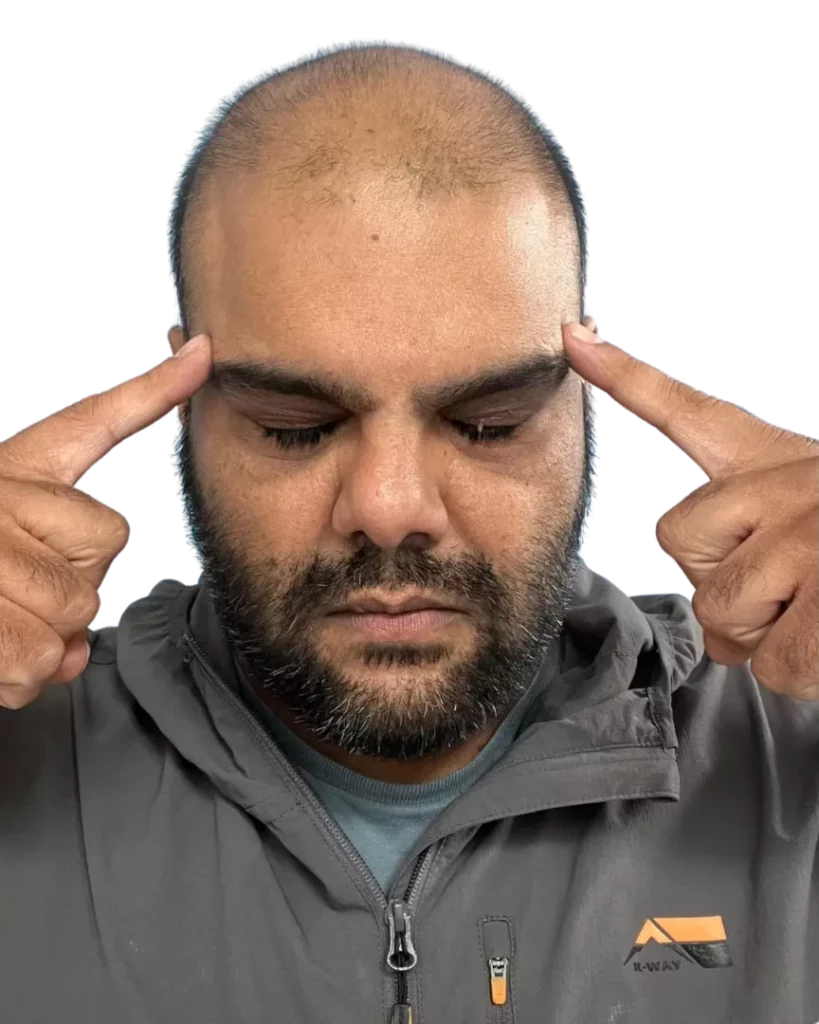
Last week in training, I watched a young athlete named Palesa go from calm to overwhelmed in the space of one drill.
She’d been doing great all session. Focused, moving well, no problems. Then the coach called her name for the next drill. The one everyone was watching. Her shoulders shot up. Her jaw clenched. She rushed the run-up. The shot missed. This is exactly the kind of moment we work through directly in mental performance coaching for young athletes.
It wasn’t because she couldn’t do it. She’d nailed the same move fifty times that week. What happened is her body panicked the second she felt watched, and that panic shut down the part of her brain she needed to actually take the kick.
Her breathing changed first. Quick, shallow, high in the chest. Her head dropped forward slightly. Her hands gripped tighter than they needed to. By the time she started her run-up, her body had already left the calm state that had produced fifty clean reps.
That’s what overwhelm looks like in a teenager. It’s not a meltdown. It’s not drama. It’s just the body flipping into a state where the skill is still there, but it’s no longer reachable. And the very first thing that changes, before anything else, is the breath.
That matters, because it means there’s always something you can do about it. Right there, in the moment, before the next action happens. If the breath is where things start to go wrong, the breath is also where you fix it.
What actually happens in the body when a teenager freezes under pressure?
It’s not really an emotional thing first. It’s a body thing first.
When a teenager feels like something is too big to handle, whether it’s actually dangerous or just feels that way, their body flips into fight-or-flight. This is the same system that kicks in if something genuinely threatening happened, and it sets off a chain reaction. This is exactly the kind of moment where breath control for kids under pressure makes the biggest difference. It’s the same pattern we break down in our guide to managing performance anxiety.
Heart rate spikes. Blood rushes to the arms and legs. Breathing gets fast and shallow. And the part of the brain in charge of clear thinking, focus, and pulling off a skill under pressure, the prefrontal cortex, basically gets put on mute while the more primal “survive this” parts of the brain take over.
There’s nothing wrong with this. It’s exactly what should happen if a kid were in real danger. The problem is the body can’t always tell the difference between an actual threat and a tough exam question or a penalty kick. It reacts the same way either time which is exactly what we see with students freezing in exams.
So you end up with a teenager who has every bit of knowledge and skill they need, except their body has just made that knowledge harder to reach, at the exact moment they need it most.
This is exactly why breath control for kids under pressure works. It’s also why breath control for teenagers under pressure needs to start with the body, not the mind. It deals with what’s actually happening in the body, not just how the moment feels.
Why does breath control work when telling a child to calm down does not?
Because “calm down” is asking the brain to do something it’s currently too overloaded to do.
Most adults, trying to help an overwhelmed teenager, go straight for the thinking. “You’ve got this.” “Don’t think about it.” “Just focus.” These are all attempts to change what’s going on in the kid’s head.
The trouble is, when the body is this fired up, thinking your way out is genuinely hard. The exact part of the brain you’d need to swap one thought for another, the prefrontal cortex, is the same part that’s already running low. Telling a panicked kid to “just focus” is asking for the one resource their body just took away.
Breath control skips that whole problem. That’s the core idea behind breath control for kids under pressure: work with the body first. It doesn’t need the thinking brain at all. It works on the body directly, flipping on the calming system without needing the teenager to think their way there.
Here’s the simple version: breathing out for longer than you breathe in sends a signal that tells the body it’s safe to relax. This is one of the first tools we teach in sport psychology coaching. This is the physical mechanism underneath every breath control technique for children under pressure. The heart rate starts to drop. The thinking brain starts coming back online. The state that lets a teenager actually perform becomes available again.
This isn’t a feel-good trick. It’s how the body works. And that’s exactly why breath control is the first thing taught in performance coaching, before anything else.
Are kids in South Africa under more pressure than international benchmarks suggest?
Honestly, yes, and it’s worth understanding why that matters here specifically.

South African teenagers are dealing with a lot at once. School pressure, family expectations, the weight of “making it,” and very often money stress in the background too. All of that adds up to a baseline level of stress that sits higher than it does for teens in a lot of other countries.
Yale neuroscientist Amy Arnsten, in a well-known paper published in Nature Reviews Neuroscience, found that even mild stress, nowhere near a full-blown crisis, can knock out prefrontal cortex function almost instantly. Not gradually. Almost immediately. [Arnsten, A.F.T. (2009). Stress signalling pathways that impair prefrontal cortex structure and function. Nature Reviews Neuroscience, 10, 410-422.] It’s one more reason breath control for kids under pressure matters more here than the global average suggests.
That’s the gap breath control closes. Not forever, and not on its own. But often enough, in the moment, to keep a teenager in “I can do this” mode instead of “my body has taken over” mode.
For a teenager already carrying a heavier stress load than most, learning to use the breath like this isn’t a nice extra. It’s the foundation everything else builds on. Breath control for teens under pressure isn’t a luxury skill. It’s foundational. It’s the starting point for the work we do through youth development coaching.
How do you actually teach breath control to a kid who thinks it is pointless?
You don’t sell it as a coping tool. You sell it as a cool fact about how the body works.
The breathing pattern itself is dead simple. You can teach it in ten minutes, practise it in under a minute a day, and use it anywhere, anytime, with zero equipment.

The pattern: This is the exact breath control method for kids under pressure that we teach in every session. Breathe in through the nose for two counts. Hold for one count. Breathe out through the mouth for four counts.
The exhale needs to be longer than the inhale, that’s the part doing all the work. The exact numbers matter less than that one rule: breathe out longer than you breathe in.
How to introduce it: Don’t bring this up for the first time when your kid is already overwhelmed. Like any skill, it has to be practised when things are calm so it’s ready when things aren’t. Framing matters when you’re introducing breath control to a child under pressure for the first time. The same way framing matters when building self-esteem in teenagers. Bring it up at dinner, in the car, somewhere low-key. Make it sound interesting, not like a fix for something broken.
“Did you know there’s one breathing trick that actually changes how your nervous system works? Want to try it?”
That framing gets curiosity instead of eye-rolling. Teenagers who get why something works are way more likely to actually use it.
Where to practise it: The week before an exam. Before training starts. Waiting to bat, waiting to serve, waiting to walk on stage. Every rep builds the habit of breath control for kids under pressure before they actually need it. Those ten seconds before anything high-stakes. The more it gets used when the stakes are low, the more automatic it becomes when the stakes are high.
What I told Palesa after the missed kick: “One breath. Use the pattern. Then go.” She did it once. Her shoulders dropped. The next rep was clean. Nothing about the drill changed. Her body just had somewhere to come back to.
When is breath control not enough on its own?
Breath control for kids under pressure is powerful, but it isn’t the end of the road. Breath control is a starting point, not the whole toolkit.
For a lot of teenagers, just learning to control their breath in pressure moments makes a real, lasting difference. It gives them something to actually do instead of just reacting, and that changes how they handle pressure everywhere, not just on the field or in the exam hall. This kind of shift is also exactly what builds resilience in youth over time.
For others, the breath is the first piece of something bigger. Their overwhelm runs deeper, or it’s tangled up with other things a breathing pattern alone can’t untangle. Those kids usually need breath control plus self-talk work, plus recovery habits, plus enough low-pressure practice that the new responses eventually become second nature.
That’s not the breath failing. It’s just that performance under pressure is built in layers, and the breath is one important layer, not the whole structure.
A 2018 review in Frontiers in Human Neuroscience looked at 15 studies and found that slow breathing reliably calms the body down and reduces anxiety. That’s the breath doing its job on its own. Separately, a major 2011 review in Perspectives on Psychological Science looked at 32 studies and found that self-talk, when actually practised rather than just tried once, consistently improves performance under pressure. [Zaccaro, A. et al. (2018). Front. Hum. Neurosci., 12:353. Hatzigeorgiadis, A. et al. (2011). Perspectives on Psychological Science, 6(4), 348-356.]
Both studies point to the same conclusion: breath control for teenagers under pressure works best as part of a system. Both work on their own. Together, they work better. The breath opens the door. Everything else keeps it open.
Real Stories. Real Shifts.
What Clients Say about working with Critiqual Performance mental performance coach Johannesburg.
These are real results from families who started with breath control for kids under pressure as their first step.
Performance anxiety in elite athletes, even when it does not show
Progress when mental training runs alongside physical training, not after it
of our clients report significant performance improvements within 6 weeks

The one thing that I really took away was the Zone of Optimal Functioning…
I want to apply it into games and life.
Nabeel Bodhanian
Professional Footballer

Thank you Rishaan, what I have notice the boy likes you so much, he is always looking forward to meet you, which is great. So you are the solution to our problem.
Richard Sithole
Businessman/dad
Breath Control for Kids Under Pressure a Skill to Train
The breath is always available. Every moment, any age, anywhere. No equipment, no quiet room, no need to already feel okay before it works. All it takes is knowing how, and practising enough that it kicks in automatically right when the pressure hits hardest.
Palesa isn’t an especially anxious teenager. There’s nothing unusual going on with her. She’s just a young athlete whose body reacted the way every body reacts when something important is about to happen. The only thing missing was one tool to bring her body back to a place where her skill could actually show up.
That’s not a huge gap to close. It’s a learnable one. And the sooner a teenager picks it up, the more moments they’ll have, in sport and at school, where the skill they’ve built is actually the skill they get to show. That’s the whole point of breath control for kids under pressure, it gives a teenager somewhere to go when their body takes over.
Start Here
If you’re looking for a starting point on breath control for kids under pressure, this is it.
If your teenager keeps arriving at big moments already past the point of performing at their best, if the panic shows up before the moment even starts, breath control is where to begin. It’s not the whole answer. But it’s the fastest place to start.
Critiqual Performance is a mental performance coaching practice based in Johannesburg, working with teenagers aged 12 to 18. We start where performance actually starts: how the body handles pressure. Every session builds a teenager’s ability to notice and manage their own stress response, starting with the breath and growing from there into the full set of mental skills that turn preparation into performance.
This isn’t mindfulness. It isn’t relaxation therapy. It’s performance coaching, starting with the simplest tool and building up. Our coaching builds on breath control for children under pressure as the first skill in a bigger toolkit.
When you’re ready for your teenager to stop letting their own nerves get in the way get in touch and let’s talk it through.
Frequently Asked Questions: Breath Control for Kids Under Pressure
Learn Breath Control for Kids Under Pressure with Critiqual Performance Mental Performance Coaching, Mulbarton, Johannesburg
Discover more from Critiqual Performance | Mental Performance Coaching Johannesburg
Subscribe to get the latest posts sent to your email.